
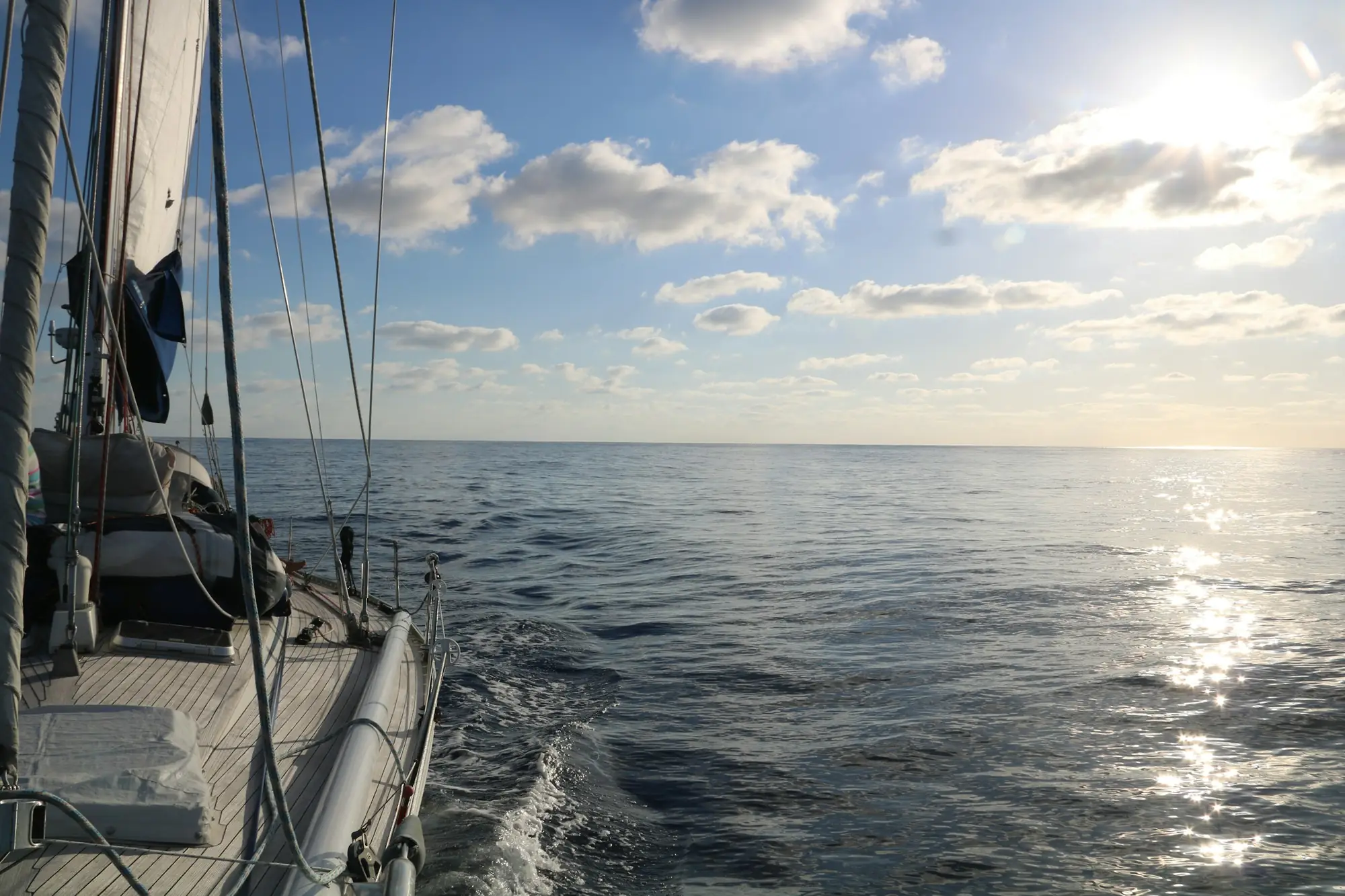
 Photo: Niklas Roth ↗
THE JOURNEY IN DETAIL
2,700 miles on the trade winds.
Las Palmas to Rodney Bay, St Lucia, is the classic trade-wind Atlantic route, sailed every year since 1986 by the ARC rally. Two and a half weeks without land, four-hour watches, flying fish on deck in the morning and stars you never see ashore. We sail an ocean yacht with an experienced skipper in ARC start week, in the company of some two hundred boats.
- Starting with the ARC fleet from Las Palmas
- Two weeks of trade wind and following seas
- Night watches and star navigation
- Landfall at Rodney Bay after 17 days
With old friends or new ones
Join a group or arrange a separate departure for your own team. Before travelling, we get to know each other, discuss everyone's experience and find suitable dates. You can also prepare together.
DAY BY DAY
Your daily itinerary.
A provisional itinerary. Weather, group readiness and local conditions may change the order and length of the stages.
- DAY 1 · Preparation
Las Palmas, meeting the boat
Gather at Las Palmas marina three days before the start. Boat familiarisation, settling in, and a run through watches and emergency drills.
Overnight: Yacht, Las Palmas marina - DAY 2 · Preparation
Provisioning and ARC seminars
Three weeks of provisioning and stowage, ARC weather and safety seminars. The fleet party in the marina in the evening.
Overnight: Yacht, Las Palmas marina - DAY 3 · 15 nautical miles
Training sail
A short sail out into the ocean: spinnaker hoist, reefing and man-overboard drills. A final check of rigging and safety gear.
Overnight: Yacht, Las Palmas marina - DAY 4 · 130 nautical miles
ARC start
The fleet starts at midday off Las Palmas. The first hours in the lee of Gran Canaria, then south into open ocean by nightfall.
Overnight: Yacht, at sea - DAY 5 · 150 nautical miles
South to find the trades
The classic tactic: head south until the wind settles. First watches, first seasickness and the rhythm of life on board.
Overnight: Yacht, at sea - DAY 6 · 160 nautical miles
Into the trade-wind belt
The wind backs north-east and builds to 18–22 knots. Twin headsails or spinnaker, and boat speed settles at 7–8 knots.
Overnight: Yacht, at sea - DAY 7 · 165 nautical miles
Turning west
Course west. Flying fish on deck in the morning, a first catch on the trolling line and the evening ARC weather report.
Overnight: Yacht, at sea - DAY 8 · 165 nautical miles
Ocean routine
Four hours on, eight off, galley duty and chafe checks on the rigging. The logbook and first notes on the stars.
Overnight: Yacht, at sea - DAY 9 · 160 nautical miles
Squalls and night clouds
Tropical squalls pass at night with rain and gusts to 30 knots. We learn to spot them on radar and reef early.
Overnight: Yacht, at sea - DAY 10 · 155 nautical miles
A thousand miles down
The thousand-mile mark from the start. A swim off the boat over five kilometres of water, weather permitting.
Overnight: Yacht, at sea - DAY 11 · 160 nautical miles
Mid-ocean
The nearest land is a thousand miles in any direction. A moonless night with the Milky Way from horizon to horizon.
Overnight: Yacht, at sea - DAY 12 · 160 nautical miles
Repairs under way
A planned inspection: spinnaker halyard, autopilot, generator. Small failures are normal in week two; we learn to fix them at sea.
Overnight: Yacht, at sea - DAY 13 · 165 nautical miles
Halfway and beyond
Past the halfway point. A half-way celebration on board and a swap of watches so everyone sees both sunrise and sunset.
Overnight: Yacht, at sea - DAY 14 · 160 nautical miles
Dolphins and ships
Pelagic dolphins on the bow and, far off, the first container ship in a week on AIS. Water and fuel stocktake.
Overnight: Yacht, at sea - DAY 15 · 170 nautical miles
The sea builds
The trades hold at 20–25 knots with a 3 metre following sea. Surfing down the swells and the day’s speed record.
Overnight: Yacht, at sea - DAY 16 · 165 nautical miles
Caribbean air
Warm and humid, the water 28 degrees. Five hundred miles to St Lucia and the boat is readied for arrival.
Overnight: Yacht, at sea - DAY 17 · 165 nautical miles
The last full night
Two hundred miles out. The last night watch, the lights of other ARC yachts on the horizon and an ETA calculated.
Overnight: Yacht, at sea - DAY 18 · 140 nautical miles
Landfall: St Lucia
The Pitons rise on the horizon at dawn. Finish off Pigeon Island, berth at Rodney Bay marina and a rum punch from the ARC welcome team.
Overnight: Yacht, Rodney Bay marina - DAY 19 · Rest
Rest on St Lucia
The first day on land. Boat wash, laundry, a long sleep and dinner ashore.
Overnight: Yacht, Rodney Bay marina - DAY 20 · Excursion
Soufrière and the Pitons
A trip to the south of the island: sulphur springs, waterfalls and a swim beneath Petit Piton. The crew’s farewell dinner in the evening.
Overnight: Yacht, Rodney Bay marina - DAY 21 · Transfer
Departure
Breakfast and transfer to Hewanorra airport.
Overnight: —
Included in the estimated price
Berth on a 50–60 ft ocean yacht
Professional skipper and mate
Full board at sea
ARC entry fee and safety seminars
Harness and lifejacket with AIS beacon
Satellite messaging for short texts
Not included in the price
Flights to the meeting point
Personal travel insurance and visas
Personal equipment
Single-room supplements and personal expenses
Kitty for fuel, water and marina berthing in Las Palmas and Rodney Bay
Accommodation and meals ashore before and after the crossing
Foul-weather gear and boots
YOUR PREPARATION
Arrive ready for the route.
Sailing experience with night passages is required: at least a week offshore, such as MONT’s Cabo Verde route. Ivan starts preparation six months out: the watch system, sail handling at night, medical basics and a training weekend.
Prepare with IvanROUTE QUESTIONS
BEFORE WE MEET ON THE TRAIL
What to prepare in advance
- A soft bag rather than a hard suitcase
- Shoes with clean, non-slip soles
- Sun and wind protection, and a light rain layer
- Personal essentials suited to your experience at sea
Once we choose a date, we agree on the equipment list, meeting point and transfer time. Please wait until the programme is confirmed before booking flights.